


Tech Visionary Marc Andreessen Foresees AI as a “Second Brain” for the Global Workforce
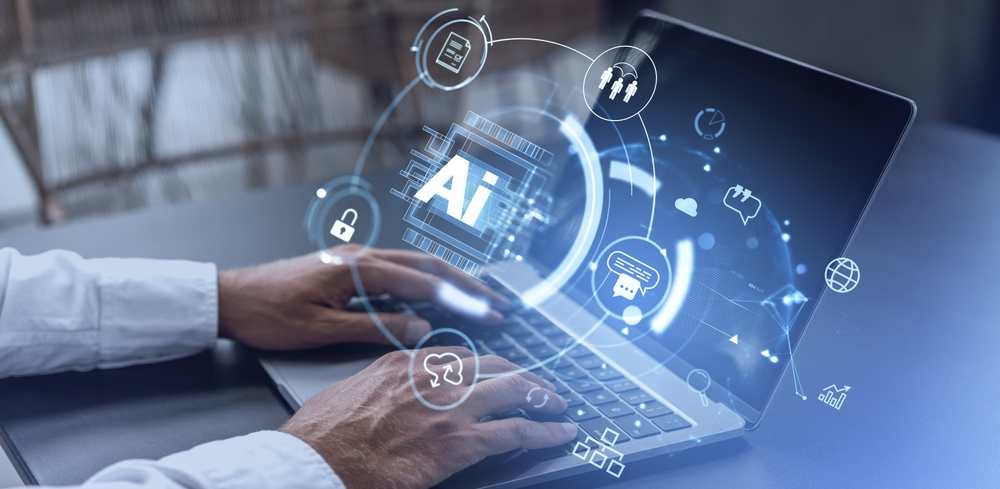
March 25, 2025 — Silicon Valley, CA – As artificial intelligence continues its rapid evolution, prominent venture capitalist and Andreessen Horowitz co-founder Marc Andreessen has joined the chorus of tech leaders predicting that AI will become an indispensable assistant—or as he calls it, a “second brain”—for nearly every worker across industries.
Speaking at the Future of Work Summit 2025, hosted by MIT Technology Review, Andreessen painted a vision of a near-future where AI augments human capabilities at every level of employment—from coders and creatives to analysts and administrative professionals.
“AI won’t replace you. But a person using AI will,” said Andreessen. “This is not about automation versus people. This is about augmentation for people.”
AI as the New Knowledge Amplifier
Andreessen’s perspective echoes that of other industry leaders like LinkedIn co-founder Reid Hoffman, who recently described AI as a “co-pilot” for modern work. But Andreessen takes it a step further, framing AI as a “knowledge amplifier” that enhances memory, decision-making, and productivity.
He referenced tools like OpenAI’s ChatGPT, Anthropic’s Claude, and Google’s Gemini, stating that they’ve already begun transforming how professionals operate—from legal teams drafting case summaries to software engineers debugging in real time.
“This is a cognitive leap, akin to the invention of the printing press or the internet,” said Andreessen. “Everyone will have access to a personalized, always-on advisor.”
Impact on Employment and Skills: A Double-Edged Sword
Despite his optimism, Andreessen acknowledged the complex realities of AI adoption. While certain job functions may become obsolete, he emphasized the emergence of “AI-fluent” roles, urging employers and policymakers to focus on reskilling initiatives.
A recent report from McKinsey & Company predicts that by 2030, up to 30% of current work activities could be automated by AI, especially in sectors like customer service, finance, education, and logistics. However, it also forecasts a net positive gain in employment driven by new roles in AI oversight, prompt engineering, and human-machine collaboration.
“The AI revolution isn’t a threat to jobs—it’s a threat to outdated skillsets,” said Andreessen. “We need to train people not to fight AI, but to work with it.”
From the Tech Trenches: How Professionals Are Already Using AI
In sectors like marketing and software development, AI is already being integrated into daily workflows. Platforms like GitHub Copilot, Jasper AI, and Notion AI are helping teams code faster, generate content, and automate repetitive tasks.
According to a Deloitte 2024 Global AI Workforce Trends Report, 68% of surveyed companies say they’ve adopted AI tools internally, and 44% report measurable productivity gains within six months of deployment.
“AI is not a novelty anymore,” said Sarah Jin, CTO of startup accelerator NeoGrid Labs. “It’s part of the digital stack, just like cloud computing or cybersecurity tools.”
The Call for Ethical AI Deployment
Both Andreessen and Hoffman have voiced concern about ethical and societal implications. While Andreessen believes in “techno-optimism”, he supports regulations around transparency, bias mitigation, and AI accountability.
“We need to ensure AI is used to empower, not manipulate,” he said. “Let’s build systems that reflect our best values—openness, inclusion, and innovation.”
Organizations such as The Partnership on AI, OECD, and AI Now Institute are pushing for global frameworks to ensure responsible AI development.













Leave a comment