


Shenzhen, China – April 28, 2025 —
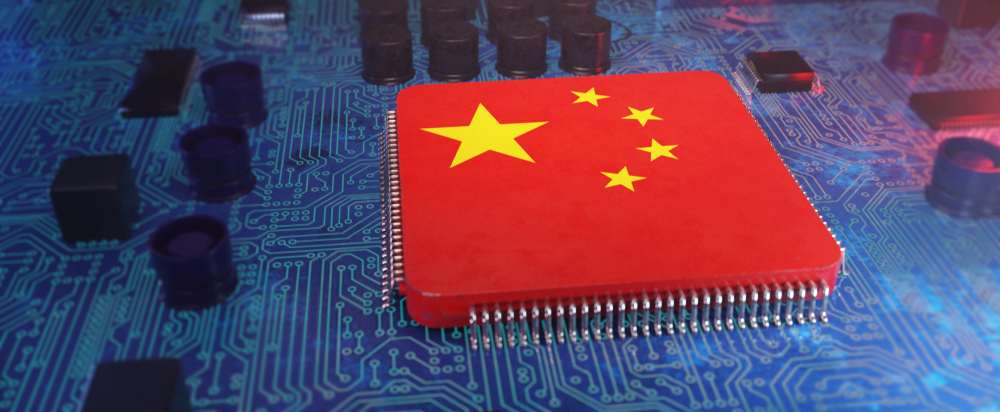
Chinese technology powerhouse Huawei Technologies Co., Ltd. is making decisive moves to strengthen its foothold in the global artificial intelligence (AI) chip market. According to a report by The Wall Street Journal, Huawei is preparing to begin large-scale testing of its new Ascend 910D AI processor, aiming to directly compete with Nvidia Corporation’s flagship H100 and H20 chips.
The Ascend 910D, developed by Huawei’s chip division HiSilicon, is expected to begin shipping test samples to leading Chinese tech companies by the end of May. Firms like Baidu, Alibaba, ByteDance, and major state-backed telecoms such as China Mobile and China Telecom are likely early recipients. Testing phases will focus on performance metrics critical for AI training and inference, particularly in generative AI and large language model (LLM) applications.
Huawei’s Strategic Push Amid U.S. Sanctions
Huawei’s latest AI advancement comes amid tightening restrictions from the U.S. Department of Commerce, which has severely limited American chipmakers’ ability to sell cutting-edge semiconductor technology to Chinese firms. In late 2024, the Biden administration expanded sanctions on AI chips, specifically targeting Nvidia’s H100 and recently developed H20, exacerbating trade tensions first escalated during the Trump era.
As a result, Nvidia warned in its Q1 2025 earnings call that it anticipates nearly $5.5 billion in inventory writedowns tied to restricted sales to China. Similarly, Advanced Micro Devices (AMD) has faced hurdles in supplying AI accelerators to Chinese customers.
Self-Reliance Drive Under Xi Jinping’s Vision
Chinese President Xi Jinping has reiterated Beijing’s strategic imperative for technological self-reliance. During an AI-focused study session of the Politburo on April 25, Xi emphasized the urgent need to “master core technologies” such as advanced semiconductors, high-bandwidth memory (HBM) systems, and next-generation computing platforms.
“We must redouble our efforts to innovate and build an independent AI technology ecosystem,” Xi declared, signaling sustained state support for domestic champions like Huawei, SMIC (Semiconductor Manufacturing International Corporation), and Cambricon Technologies.
In line with this national agenda, Huawei is also expanding its CloudMatrix series, unveiling the CloudMatrix 384 in early April — a supercomputing cluster designed to connect thousands of Ascend 910C chips, leveraging parallel processing over individual chip performance enhancements.
Market Implications and the Race Ahead
While Huawei has historically faced difficulties matching Nvidia’s performance, experts from IDC and Gartner suggest that with enough volume and strategic government backing, the Ascend 910D could carve a significant niche in China’s burgeoning AI sector, especially as domestic demand surges for LLM development, autonomous driving, and industrial automation.
Meanwhile, Chinese AI startups, including iFlytek, SenseTime, and Megvii, are reportedly pivoting to domestically sourced hardware solutions to future-proof their operations against future export bans.
Despite progress, analysts caution that Huawei still faces challenges sourcing advanced lithography equipment needed for chip production, as firms like ASML Holding in the Netherlands face pressure to limit sales of EUV (extreme ultraviolet) machines to China.
Global Outlook: A Bifurcated AI Future?
As the global AI race intensifies, industry watchers predict a “bifurcation” in AI ecosystems, with a U.S.-led bloc centered around Nvidia, AMD, and Intel, and a China-centered bloc led by Huawei, SMIC, and up-and-coming firms such as Moore Threads and Biren Technology.
If Huawei’s Ascend 910D succeeds in approaching or matching the capabilities of Nvidia’s offerings, it could reshape not only China’s AI future but also the broader geopolitics of technology and innovation.














Leave a comment