


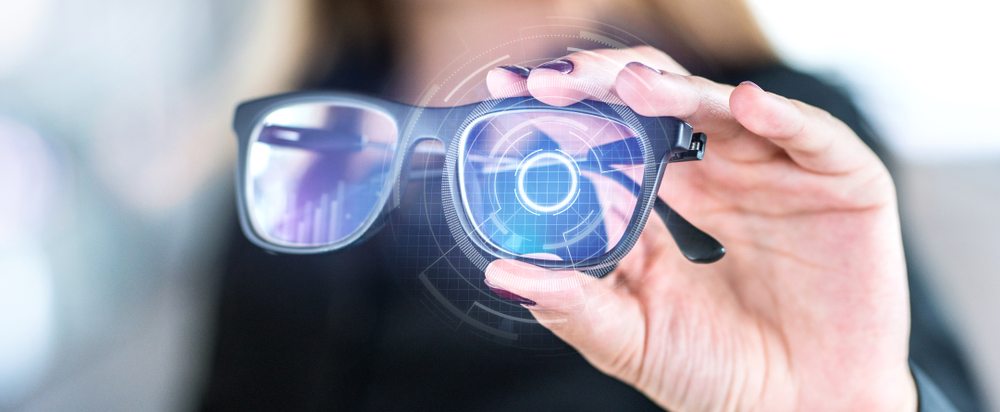
Shanghai, China — April 23, 2025 — In a major breakthrough for accessible technology, researchers at Shanghai Jiao Tong University have unveiled a revolutionary pair of AI-enabled smartglasses designed to assist blind and visually impaired individuals in navigating public spaces — without relying on traditional tools like guide dogs or white canes.
This emerging wearable, which incorporates computer vision, real-time spatial audio, and bone conduction feedback, is being hailed as a “paradigm shift” in assistive mobility. The project is part of a growing field of AI-based accessibility solutions, following global trends driven by tech giants like Google, Apple, and Meta.
Retrofitted Tech: Giving New Life to Google Glass
The system is built on a modified version of the now-discontinued Google Glass Enterprise Edition 2, abandoned by Alphabet in 2023. Researchers mounted a miniaturized AI processor, roughly the size of a credit card, onto the frame. This compact unit interprets real-time imagery captured by an integrated camera and guides users through voice prompts and haptic cues.
Dr. Leilei Gu, the lead researcher, explained:
“Our system continuously updates the user’s spatial context. If a chair appears, the AI calculates how many steps are needed, then updates guidance dynamically as the person moves — effectively replicating how a sighted individual processes visual stimuli.”
How It Works: Real-Time Object Recognition and Navigation
The smartglasses use deep learning algorithms trained on thousands of indoor and outdoor environments to recognize objects, surfaces, and spatial hazards. As the user approaches an obstacle, audio alerts are delivered through bone conduction — a method that transmits vibrations directly to the inner ear, bypassing the eardrum, thereby preserving environmental awareness.
In addition to the glasses, the team developed a “synthetic skin” patch made of PDMS polymer that can be worn on the body. It acts as a proximity sensor, alerting users to nearby objects using subtle vibrations. Although not directly linked to the glasses’ AI core, it provides an extra layer of environmental awareness.
Accessibility Meets Affordability: Disrupting Traditional Aids
Current assistive technologies for the visually impaired can be prohibitively expensive. Training a guide dog, for instance, costs up to €60,000, according to the European Blind Union. Meanwhile, white canes, though cost-effective, offer limited spatial data and cannot detect obstacles above waist height.
This new wearable aims to bridge that gap with affordability and discreet design. According to Chris Lewis, a UK-based telecom and accessibility analyst:
“This is a massive leap. The potential of combining AI, wearable cameras, and non-intrusive sound feedback could dramatically increase independence for millions of people worldwide.”
Global Impact and Next Steps
There are over 30 million visually impaired individuals in Europe alone, and around 285 million globally, per World Health Organization (WHO) data. Researchers at Shanghai Jiao Tong University hope to conduct larger-scale clinical trials in Europe, North America, and Southeast Asia by early 2026.
While still in pre-commercial stages, the technology has been tested with 18 users across urban and indoor settings in Shanghai. Future enhancements may include miniaturized cameras embedded in contact lenses and AI-driven predictive navigation systems capable of interpreting traffic patterns and pedestrian behavior.
Competitive Ecosystem: A Booming Market for AI Accessibility Tools
This innovation places the Shanghai team in competition with companies like:
- OrCam Technologies, known for AI vision assistance devices
- Envision (Netherlands), developers of AI smartglasses for the blind
- Aira (US), which offers live human-guided navigation over smart devices
- Microsoft’s Seeing AI, a mobile app for object and text recognition
The wearables market for accessibility is projected to reach $3.2 billion by 2028, according to a recent report by MarketsandMarkets.
Final Thoughts
As AI and wearable technology converge, these smartglasses represent not only a technological innovation but a movement toward equity, dignity, and independence for millions. By turning cutting-edge research into real-world accessibility tools, the Shanghai team is reshaping what it means to be “visually impaired” in a digital-first society.














Leave a comment